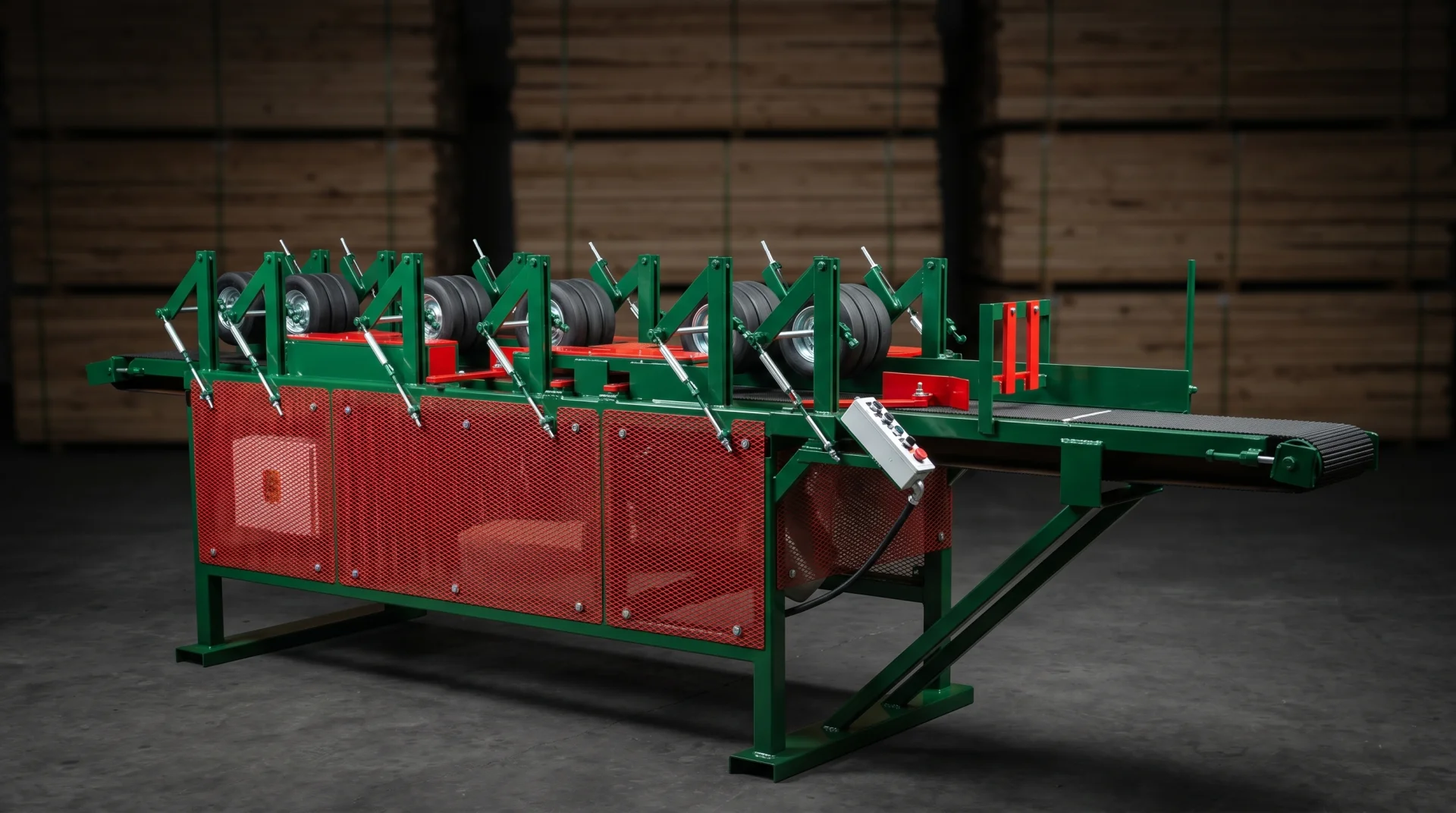
Multi-Notch Multi-Rip Saw
The Morgan Multi-Notch Multi-Rip Saw is the most flexible machine in the Morgan notcher line. It notches and rips in a single pass, producing 2, 3, or 4 finished products at once. Instead of running material through a separate notcher and then a rip saw, this machine does both operations in one feed.
Configured to Your Production
Every machine is built to order. You tell us what you need, how many notching heads, how many rip blades, and what dimensions you are running, and we configure the machine to match. The naming convention depends on the setup:
- Double Notch / Single Rip, 2 notching heads, 1 rip blade, 2 finished products per pass
- Triple Notch / Double Rip, 3 notching heads, 2 rip blades, 3 finished products per pass
- Quad Notch / Triple Rip, 4 notching heads, 3 rip blades, 4 finished products per pass
Not sure which configuration fits your operation? Call us and we will help you figure it out based on your material, line speed, and production goals.
Features and Specifications
- 2, 3, or 4 notching heads, configurable
- 2, 3, or 4 rip blades, configurable
- Notches first, then rips lengthwise, finished product in one pass
- Powered belts in and out for continuous feed
- Hold-down wheels throughout with adjustable tension and height
- Sawdust hookups under each head for dust collection
- Motor sizes range from 15 to 25 HP
- Adjustable notch depth
- Adjustable rip depth
- Variable speed belts controlled with VFD
- Fully customizable, built to your specifications
One Pass, Multiple Products
The real advantage of the Multi-Notch Multi-Rip Saw is throughput. Material enters the machine, gets notched by the notching heads, then gets ripped lengthwise by the rip blades, all in one continuous feed. Depending on the configuration, you get 2, 3, or 4 finished pieces out the back end for every board that goes in.
For pallet plants running high volumes of stringers or similar components, this eliminates multiple handling steps, reduces the number of machines on the floor, and cuts labor per unit. The VFD-controlled variable speed belts let you match feed rate to material and production requirements.